Teak
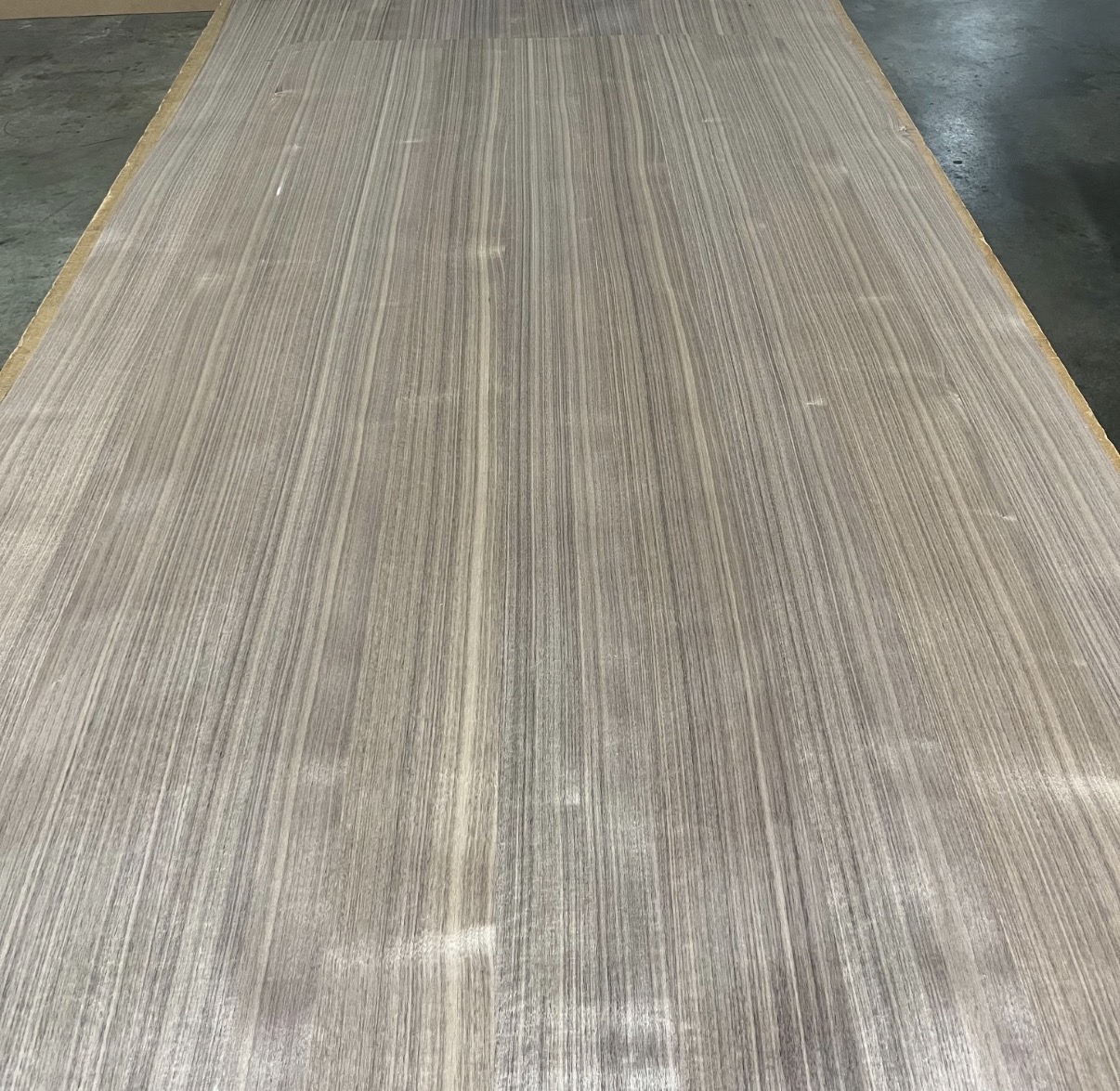
Straight-Line Teak Architectural Veneer This large-format panel showcases the remarkable linear grain character of straight-line teak veneer, laid out in full sheet form across a warehouse floor at Rosebud Veneer and Plywood. The face presents a sophisticated palette of warm tawny browns, cool greiges, and soft taupe tones running in parallel vertical striations from edge to edge. Subtle lighter cream and pale gold ribbon lines punctuate the surface at irregular intervals, a hallmark of teak's naturally interlocked grain structure and the reason designers and specifiers have prized this species for generations. The veneer surface appears raw and unfinished, allowing the full depth and texture of the grain to read clearly without the distortion of a topcoat. The sheet demonstrates exceptional consistency across its full width, with the rift-style slicing producing tight, uniform grain lines that flow with architectural precision. The edges reveal the warm golden MDF or particleboard substrate beneath, confirming this is a shop-ready panel built for immediate integration into millwork, cabinetry, wall paneling, or custom furniture applications. The scale of the panel — clearly spanning several feet in both dimensions — speaks to the large-format capability that sets Rosebud apart from smaller veneer operations. Teak at this quality level brings a level of refinement to interiors that few species can match. Its naturally dense, oily character lends itself beautifully to high-end commercial environments, yacht interiors, executive offices, and residential feature walls where longevity and visual sophistication are equally demanded. With thirty years of architectural veneer expertise, Rosebud Veneer and Plywood sources and processes teak to the exacting standards that Louisville's finest architects, designers, and custom woodworkers have come to rely on. Contact us for current availability and samples.