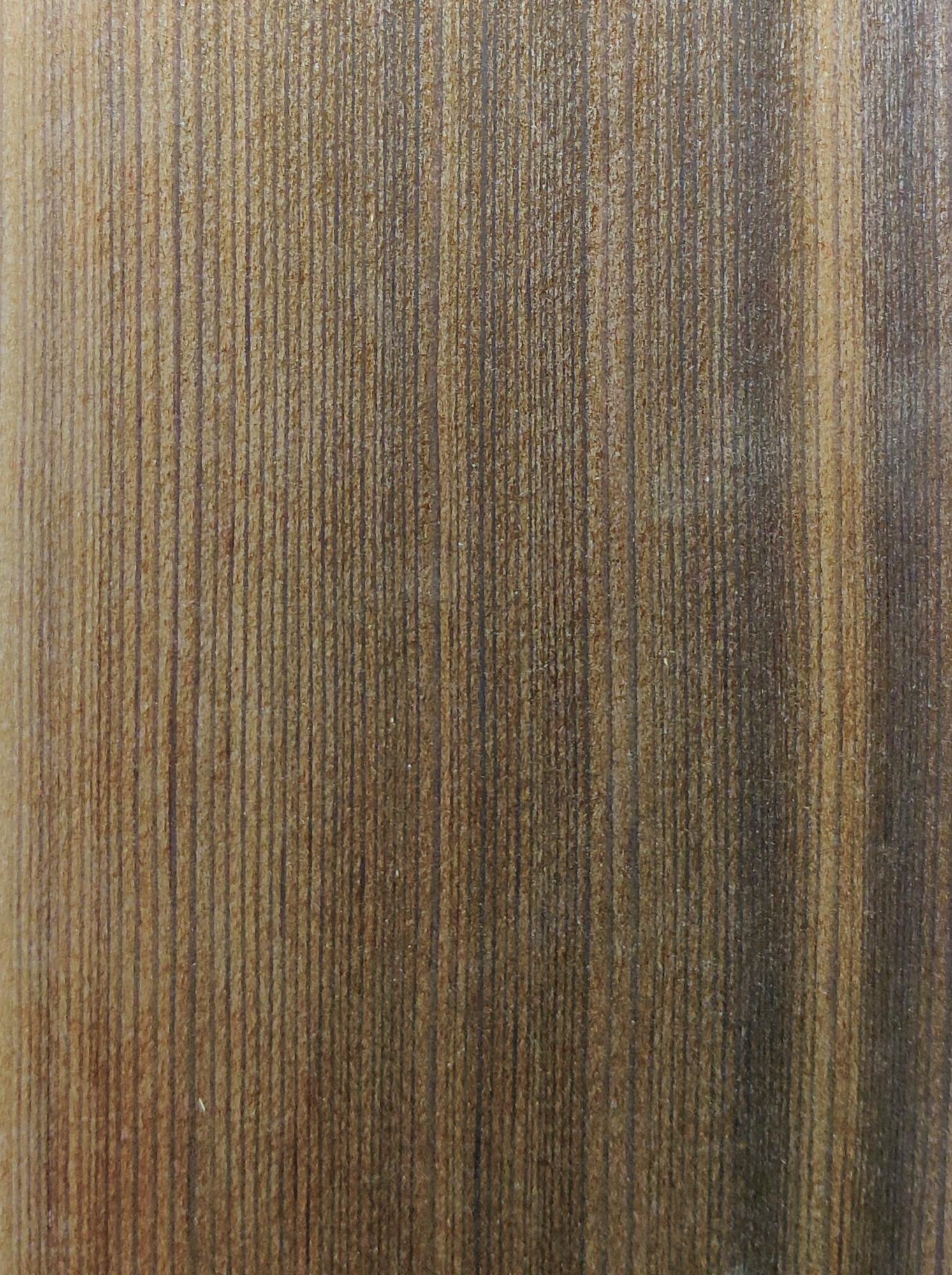
Fumed Quartered Larch
Fumed Quartered Larch presents a striking vertical grain pattern with dramatic tonal variation, ranging from warm golden-amber tones to deep charcoal browns and rich espresso hues. The quartersawing technique reveals the wood's medullary rays in tight, straight lines that run uniformly from edge to edge, creating a refined linear rhythm across the face of the veneer. The fuming process — a reaction between the wood's natural tannins and ammonia — has produced those signature dark streaks and moody contrasts that make this species particularly distinctive among architectural veneers.
The surface exhibits a raw, unbuffed texture that speaks to the honest character of the material, with fine grain lines densely packed and consistent throughout. The color story moves fluidly between zones of warm honey-brown and dramatically darkened fields, giving the sheet a almost painterly quality without sacrificing the authenticity of natural wood. These tonal shifts are organic and unrepeatable, meaning each panel delivers a one-of-a-kind visual experience in any application.
At Rosebud Veneer and Plywood, Fumed Quartered Larch is an exceptional choice for statement wall paneling, custom millwork, commercial casework, and high-end furniture faces where depth and drama are the design intent. With thirty years of architectural veneer expertise serving designers, architects, and contractors throughout Louisville and beyond, Rosebud can source and match this material to your project specifications. Samples are available upon request.
UsesArchitectural Millwork: Frequently used for high-end wall and ceiling panels, doors, and custom millwork in hotels, office lobbies, and boardrooms. High-End Cabinetry: A popular choice for luxury kitchen and bath cabinetry where a clean, linear look is desired. Furniture Design: Used for both commercial and domestic statement pieces, including tables and desks. Luxury Interiors: Its deep color and stability make it suitable for yacht and aircraft interiors.
SourcesWestern Russia, The Alps, and the UK.
Meta TitleFumed Quartered Larch Wood Veneer | Rosebud Veneer
Sheet SizeCall for Pricing and Availability
Other NamesFumed Quartered Larch
WorkabilityCutting & Machining: Fumed larch cuts and machines well with standard woodworking tools. The veneer itself can be cut with a sharp utility knife. Sanding & Finishing: It sands smoothly and readily accepts a wide variety of finishes. Before finishing, resin-rich areas should be degreased. A clear coat or oil is often used to highlight the deep color and straight grain. Gluing: When bonding fumed veneers, some standard adhesives (like PVA or urea formaldehyde) can experience bond failure due to the residual ammonia in the wood. It is recommended to use a melamine urea (MUF) resin adhesive for optimal bonding. Grain
AvailabilityRenewable Resource: Like most veneers, larch is highly efficient, producing far more usable surface area per log than solid lumber. Certifications: High-quality fumed larch is widely available with FSC (Forest Stewardship Council) or PEFC certifications, ensuring it originates from responsibly managed forests. Process Impact: The fuming process uses ammonia to react with the wood's natural tannins. While the process itself is considered "natural" because it doesn't involve heavy surface dyes or pigments, it must be handled in controlled industrial environments to manage ammonia fumes safely.
Special NoteFumed quartered larch veneer is a rich, dark brown architectural material known for its consistently straight grain and durability.
Grain TextureQuartered Cut: This cutting method produces an exceptionally straight, uniform, and vertical grain pattern that is highly desirable for modern architectural applications where consistency is key.
CharacteristicsAesthetics: The fuming process transforms the natural yellowish-brown larch heartwood into rich walnut to deep chocolate brown tones with a "light and shadow effect". This deep color is permanent and penetrates the wood fibers, unlike a surface stain. Durability: Fuming enhances the wood's UV stability, making it more resistant to bleaching from sun exposure. Larch solid wood is notably harder than most other conifers. Stability: The fuming process is said to make the resulting veneer more elastic and easier to work with than untreated larch.
Scientific NameLarix decidua (fumed)
Price DescriptionChocolate Brown Larch
Price Fumed Wood Veneer6