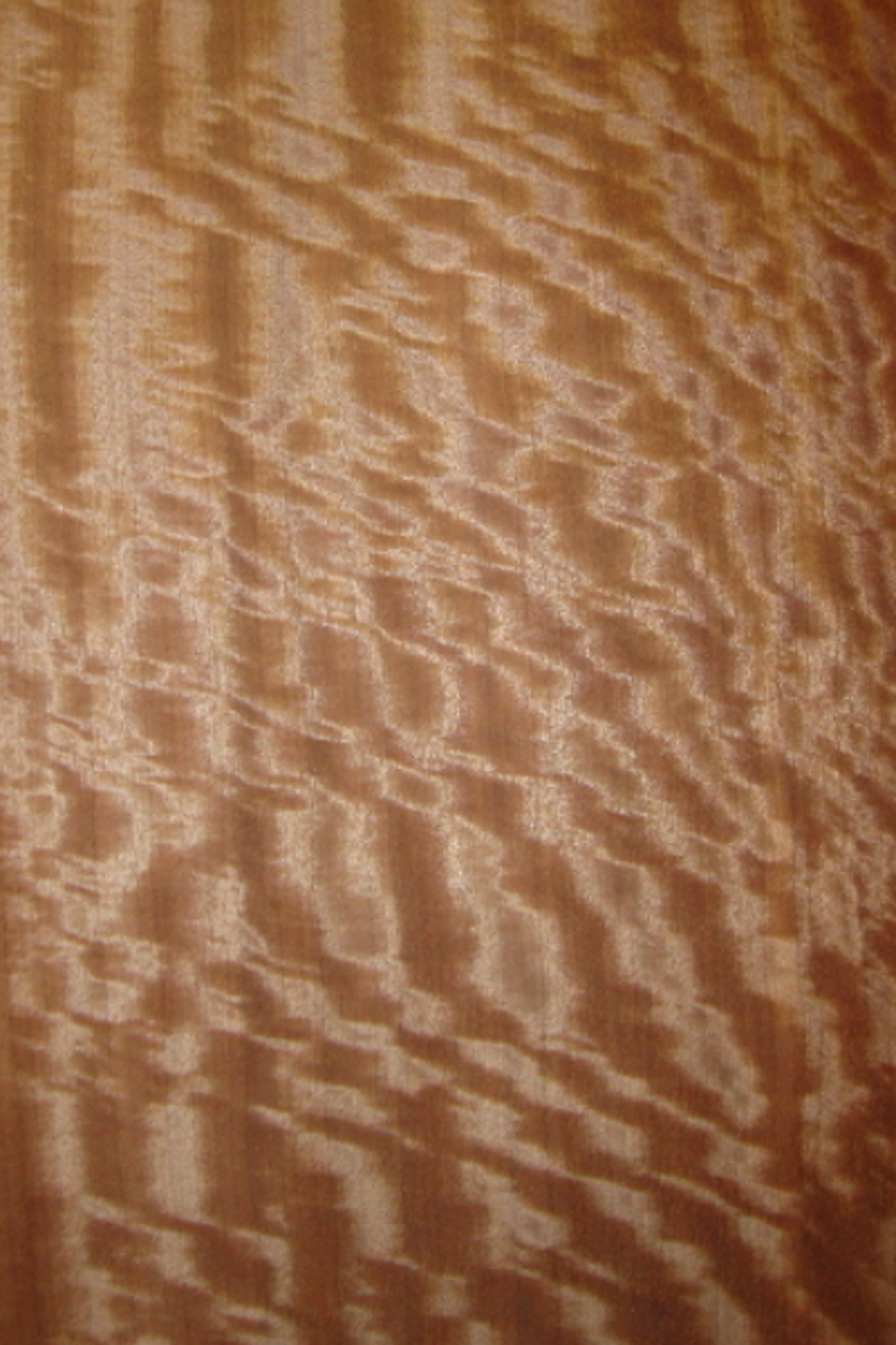
where altitude and aridity strip moisture from the air and flood interiors with a penetrating, high-desert luminance that would expose any veneer lacking genuine optical complexity. Here in Durango, the same dense, undulating mottled figure that held its shimmer under Duluth's flat winter light now performs under conditions of extreme clarity—the tightly stacked horizontal ripples and vertical ribbon striping refracting Colorado's intense southwestern sun into that three-dimensional movement across the golden-tan surface, proving that the figure's depth is inherent to the wood's cellular architecture rather than dependent on any particular quality of ambient light. Durango's designers, working across ski lodge renovations, boutique hospitality projects, and the refined residential market that lines the Animas River valley, find in black mottled makore a warmth that complements the region's native sandstone and timber palettes without merely echoing them—the amber and honey-brown depth reads as both familiar and distinctly cosmopolitan against rough-hewn mountain contexts. What matters most for the specification conversation happening in these studios, though, is how the veneer's visual weight shifts as it moves from the sun-drenched southern exposures typical of Durango construction into the deeper interior rooms of Durham, where