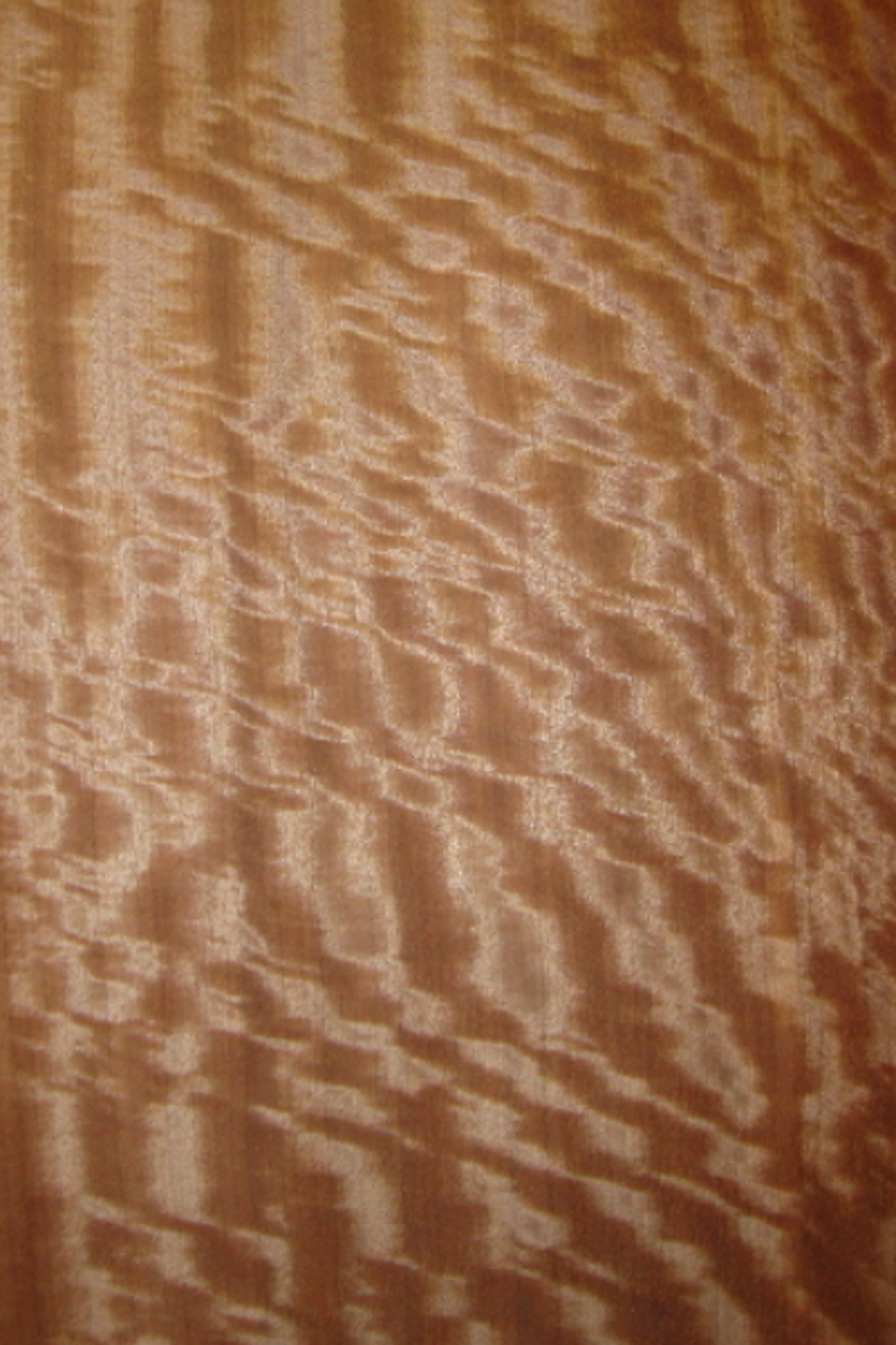
architectural restraint finds its most articulate expression. In Brookline, where the built environment carries a layered intelligence shaped by academic proximity and deeply rooted design literacy, the dense mottled figure of this makore—those tightly stacked, irregular horizontal ripples interlaced with vertical ribbon striping—meets an audience that reads surface not as decoration but as material argument. The golden-tan base with its amber and honey-brown depth performs differently here than it did in Bronxville; where Bronxville absorbed the veneer into a tradition of residential refinement, Brookline tests it against a more analytical eye, asking whether the shimmering three-dimensional movement across the face can sustain scrutiny at the level of craft rather than mere impression. It can, and it does—which is exactly what carries this sheet forward into Brooks, where the conversation shifts from intellectual density toward something