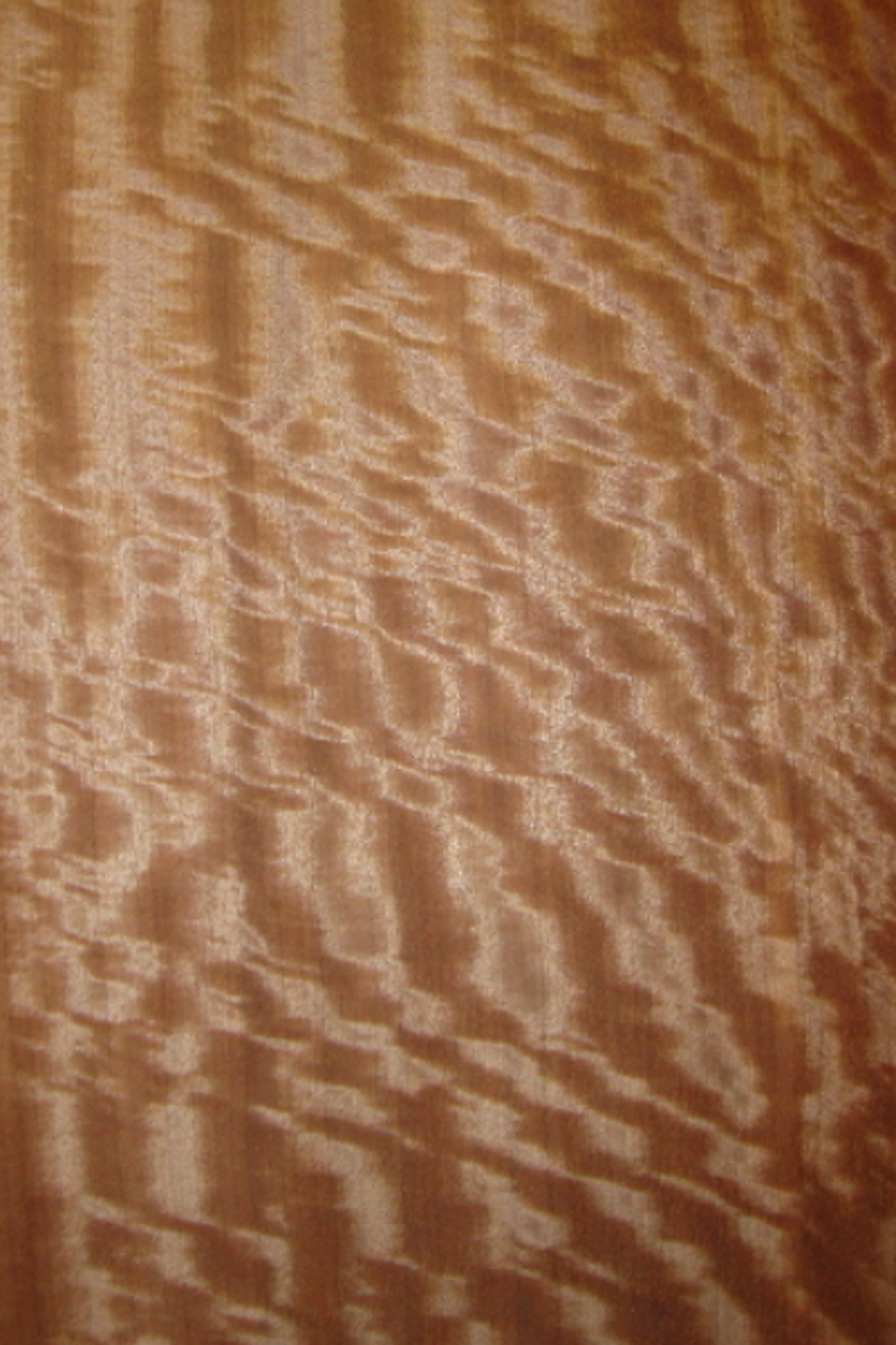
a entirely different palette of stone, snow, and alpine light. In Basalt, where the Roaring Fork Valley demands materials that hold their own against landscapes of raw geological force, the dense mottled figure of Black Mottled Makore—those tightly stacked, shimmering ripples moving across a warm golden-tan field—brings an interior warmth that neither mimics nor retreats from the mountain context but instead answers it with its own kind of depth. Where Barrington's estates frame the veneer within traditions of formal residential architecture, Basalt asks it to perform in spaces where massive timber, concrete, and glass already command attention, and the three-dimensional optical movement inherent in the mottle proves it can hold a wall beside any of them. This is the adaptability that carries the sheet forward, and when it arrives next in Baton Rouge, the conversation shifts once more—from alpine austerity to a Southern architectural vocabulary where warmth is not contrast but